Bone Grafting in Ann Arbor: Why It May Be the First Step Toward Dental Implants
If you have been told you need a dental implant, you may also hear your oral surgeon mention bone grafting. For many patients, that can sound intimidating at first. But in reality, bone grafting is a common, highly effective procedure that helps rebuild or preserve the jawbone so it can properly support a future dental implant.
At Trillium Oral Surgery & Implantology, our team provides advanced bone grafting in Ann Arbor for patients who need to restore lost bone, protect their oral health, and create a stronger foundation for long-term implant success.
Whether you recently had a tooth removed or have been missing a tooth for years, understanding how bone changes after tooth loss can help you see why bone grafting may be recommended.
Why Bone Loss Happens After Tooth Loss
Your jawbone is active, living tissue. When a natural tooth is in place, the surrounding bone exists to support that tooth. The tooth root stimulates the bone every time you bite or chew, helping maintain its shape, width, and height.
Once a tooth is removed, that stimulation stops. Because the bone is no longer needed to support the tooth, it begins to shrink over time. This process often starts with the ridge becoming narrower, followed by a loss of height.
For patients considering dental implants, this matters because implants need healthy, stable bone for support. If too much bone has been lost, there may not be enough structure to place an implant safely or predictably without first rebuilding the area.
What Is Bone Grafting?
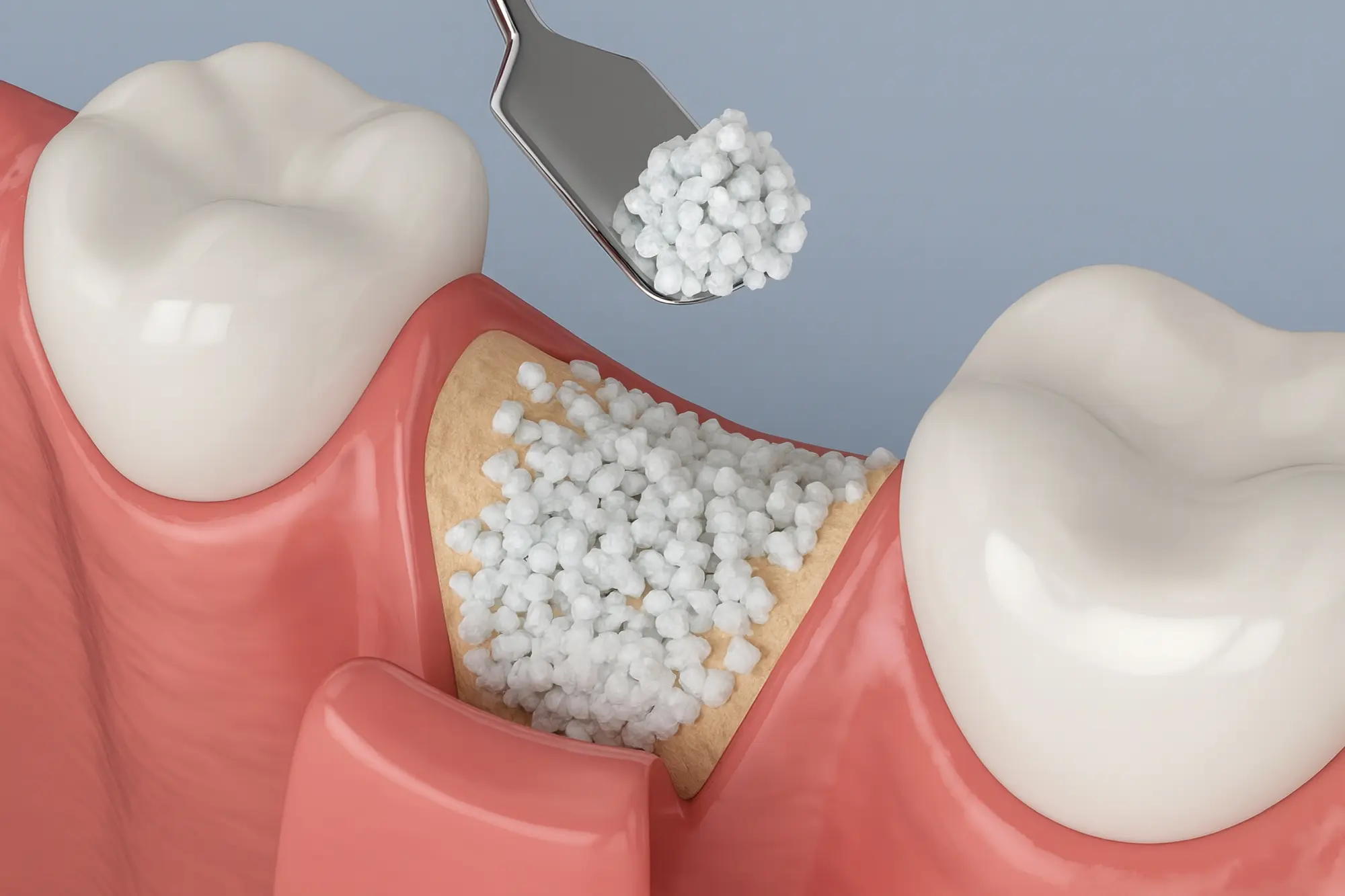
Bone grafting is a procedure that helps preserve or rebuild bone in the jaw. In many cases, bone grafting is performed at the same time as a tooth extraction. This is often called socket preservation.
When a tooth is removed, bone graft material can be placed directly into the empty socket. This material acts like a scaffold. Over time, your own bone cells move across that scaffold and begin forming new bone.
The goal is to maintain the dimensions of the jawbone so the area does not collapse or shrink as much after the tooth is removed. By preserving the height and width of the bone early, your oral surgeon may be able to make future implant treatment more straightforward.
Why Bone Grafting Is Important Before Dental Implants
Dental implants are designed to function like artificial tooth roots. They are placed into the jawbone, where they need a stable foundation to heal and integrate properly.
If the bone is too narrow, too short, or too thin, the implant may not have the support it needs. Bone grafting can help rebuild that missing structure and create a healthier foundation for implant placement.
In some cases, a simple bone graft at the time of extraction can help patients avoid more complex treatment later. If a tooth is removed and no graft is placed, the ridge may collapse over time. Once that happens, the surgeon may need to rebuild the width or height of the jawbone using more advanced techniques.
While advanced grafting can still be very successful, preserving bone early is often the more efficient path when an implant is part of the treatment plan.
Does Bone Graft Material Come From the Patient?
Many patients are relieved to learn that bone graft material does not always need to come from their own body.
In the past, some bone grafting procedures required harvesting bone from another area, such as the jaw, hip, or skull. These procedures were more involved and often required a hospital setting.
Today, many bone grafting procedures can be completed in the office using carefully processed donor bone or other grafting materials. These materials are designed to provide the mineral scaffold your body needs to form new bone. They are screened, processed, and prepared for safe use.
Because this approach does not require a second surgical site, patients can often experience a more comfortable recovery than they would with older grafting techniques that required harvesting bone from another part of the body.
How PRF Supports Bone Grafting
One of the advancements that has improved bone grafting is the use of platelet-rich fibrin, often called PRF.
PRF is created from a small sample of the patient’s own blood. The blood is placed in a centrifuge, which helps concentrate platelets and growth factors. These growth factors can then be combined with grafting material to create what is sometimes called “sticky bone.”
Sticky bone helps the graft material hold together more effectively. It also releases growth factors over time, which may support soft tissue healing, help maintain a healthier surgical site, and contribute to a smoother recovery.
For patients, this kind of advancement can make bone grafting feel less intimidating and more predictable.
Is Bone Grafting Complex?
Bone grafting can range from very straightforward to highly advanced, depending on how much bone has been lost and where the graft is needed.
A socket preservation graft placed at the time of extraction is often simpler than rebuilding an area where the bone has already collapsed. More complex cases may involve restoring significant width or height to the jawbone, which requires additional training, experience, and careful surgical planning.
This is one reason it is important to choose a team with a strong focus on reconstructive oral surgery and implant-related procedures. At Trillium Oral Surgery & Implantology, our doctors bring advanced training and experience to cases involving bone grafting, tissue grafting, dental implants, and complex reconstruction.
What Makes Advanced Training Important?
Bone grafting is not just about placing material into an area of missing bone. It requires understanding how the body heals, how the soft tissue will respond, how the graft should be stabilized, and how the final implant will eventually be placed.
Additional medical and surgical training can be especially valuable for patients with more complex health histories. Many people seeking dental implants are older adults or patients managing other medical conditions. A broader background in medicine and surgery can help an oral surgeon think through treatment in a more comprehensive way.
For patients, this means your care is not only focused on the missing tooth. It is planned with your health, anatomy, comfort, and long-term outcome in mind.
When Should You Consider Bone Grafting?
You may need bone grafting if:
- You are having a tooth removed and want to replace it with a dental implant in the future
- You have been missing a tooth for a long time
- You were told you do not have enough bone for an implant
- Your jawbone has narrowed or collapsed after tooth loss
- You need ridge augmentation or sinus lift treatment before implant placement
The only way to know for sure is through a consultation. Your oral surgeon can evaluate your jawbone, review imaging, and determine whether bone grafting is needed.
Bone Grafting in Ann Arbor at Trillium Oral Surgery & Implantology
Bone grafting has changed what is possible for patients with missing teeth. By preserving or rebuilding the jawbone, this treatment can help make dental implants possible for patients who may not otherwise have enough bone to support them.
If you need bone grafting in Ann Arbor, Trillium Oral Surgery & Implantology offers advanced, patient-focused care designed to support your comfort, healing, and long-term results. Our team can walk you through your options, explain whether grafting is needed, and help you take the next step toward a stronger, healthier smile.
Call (734) 761-5885 today to schedule a consultation and learn more about bone grafting, dental implants, and reconstructive oral surgery in Ann Arbor.